
The Shore Is Full of Treasure
Rockhounding on Lake Superior is a slow, meditative practice. Here is everything you need to begin.
Why Lake Superior?
Lake Superior is one of the premier rockhounding destinations in North America. Ancient lava flows, glacial action, and centuries of wave action have exposed and polished an extraordinary variety of stones — agates, thomsonite, chlorastrolite, basalt, fluorescent sodalites, and more.
Rockhounding here is not about rushing. It is about slowing down, scanning the gravel, and learning to see what was always there. Most people walk right past a Lake Superior agate. Once you know what to look for, you will never unsee them.
What You Might Find
Lake Superior Agate
UncommonThe most prized find on the North Shore. Look for translucent red, orange, and yellow banding. Agates are often found in gravel bars and river mouths. Wet them to see the color pop.
Thomsonite
RareA rare zeolite mineral found almost exclusively near Grand Marais, MN. Look for pink, white, and green eye-like patterns. Highly collectible.
Basalt & Rhyolite
CommonThe dark volcanic rock that forms the backbone of the North Shore. Often contains vesicles (gas bubbles) filled with minerals. Common and beautiful.
Chlorastrolite (Greenstone)
Very RareMichigan's state gem, also found on Isle Royale and occasionally the MN shore. Distinctive turtle-shell pattern in green and black.
Jasper
CommonOpaque red, yellow, and brown stones. Often found mixed with agate material. Smooth and satisfying to hold.
Quartz & Chalcedony
CommonWhite to milky translucent stones. Chalcedony is the family that includes agates — look for waxy luster and slight translucency.
Fluorescent Sodalite
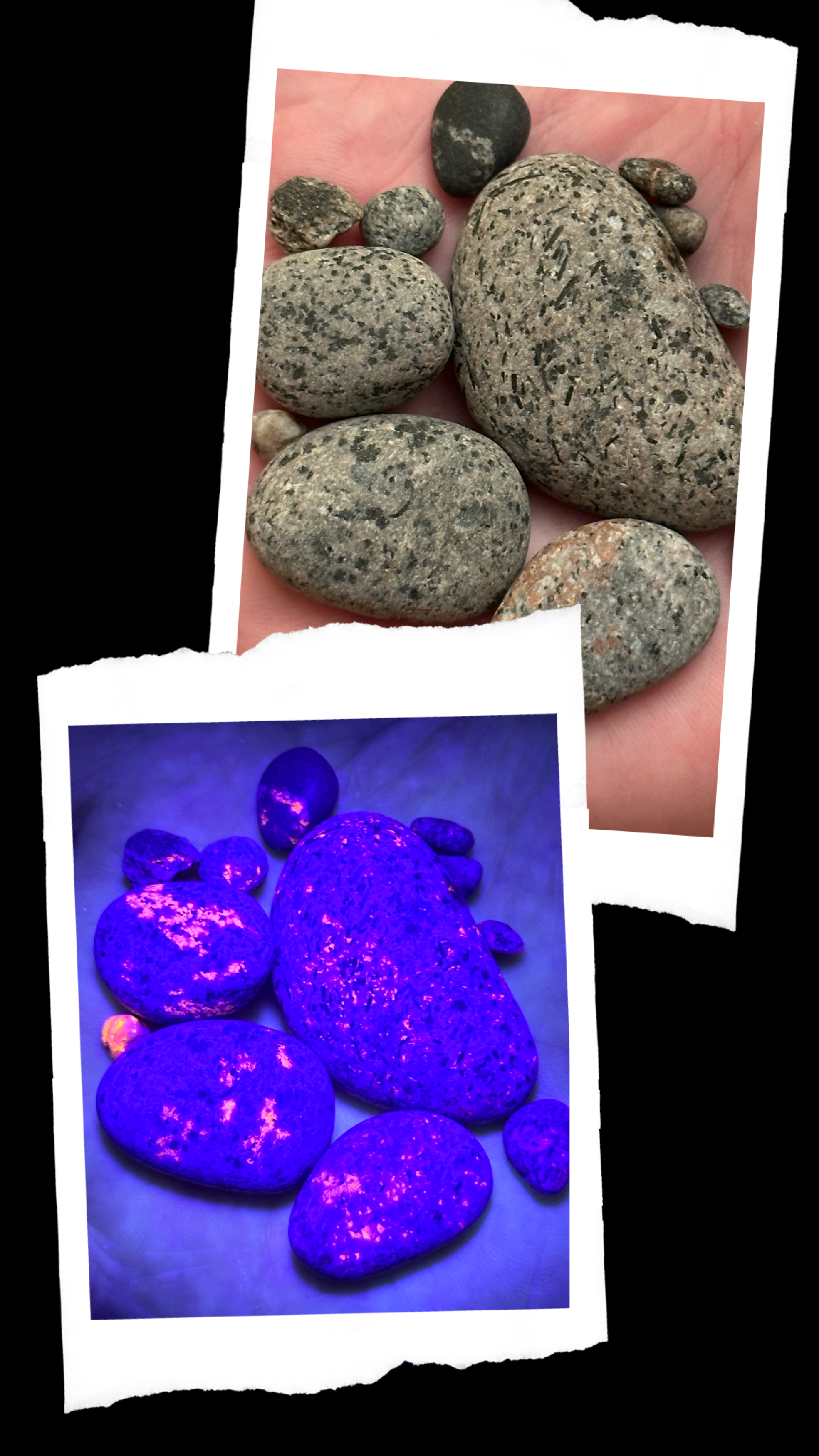
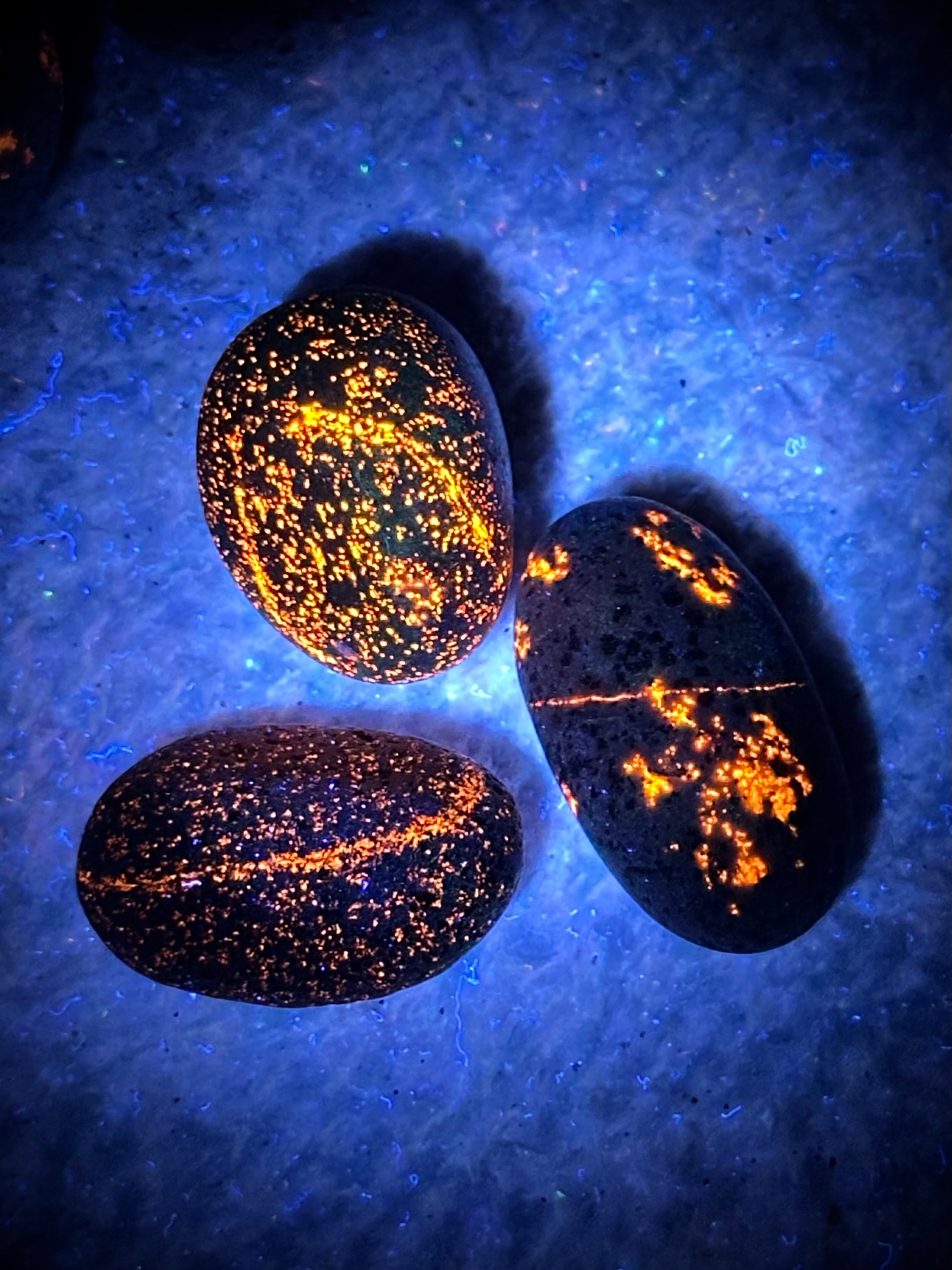
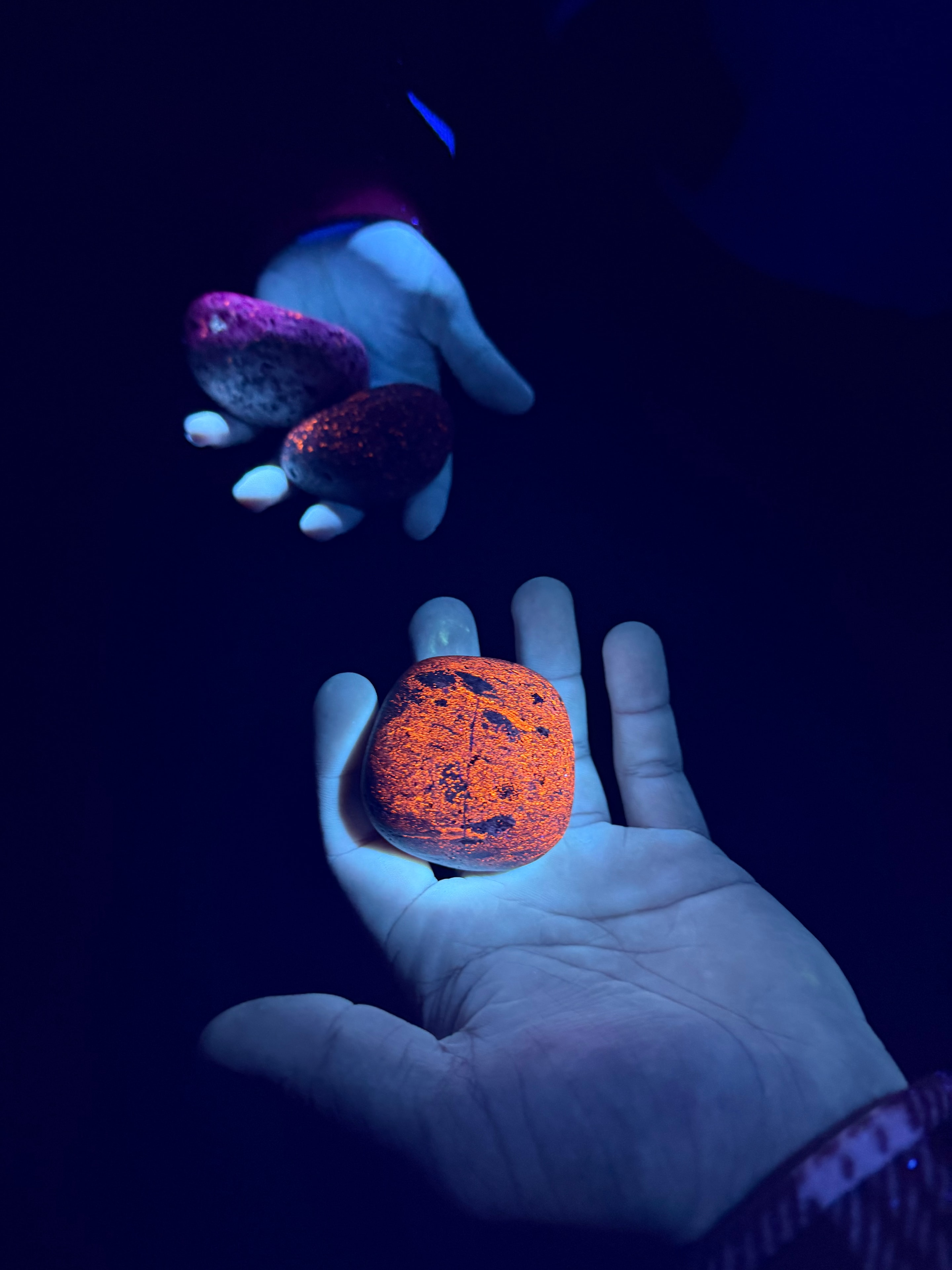
Special FindSome people call them Yooperlites — but their official name is fluorescent sodalite. Under normal daylight they look like ordinary gray or tan rocks. Under a special UV shortwave light, they come alive with a brilliant orange and yellow glow. They are found along the shores of Lake Superior, particularly on the Upper Peninsula of Michigan. Hunting for them at night with a UV flashlight is an unforgettable experience — it feels almost like being on a pirate treasure hunt when the rocks light up on the beach.
Omarolluk
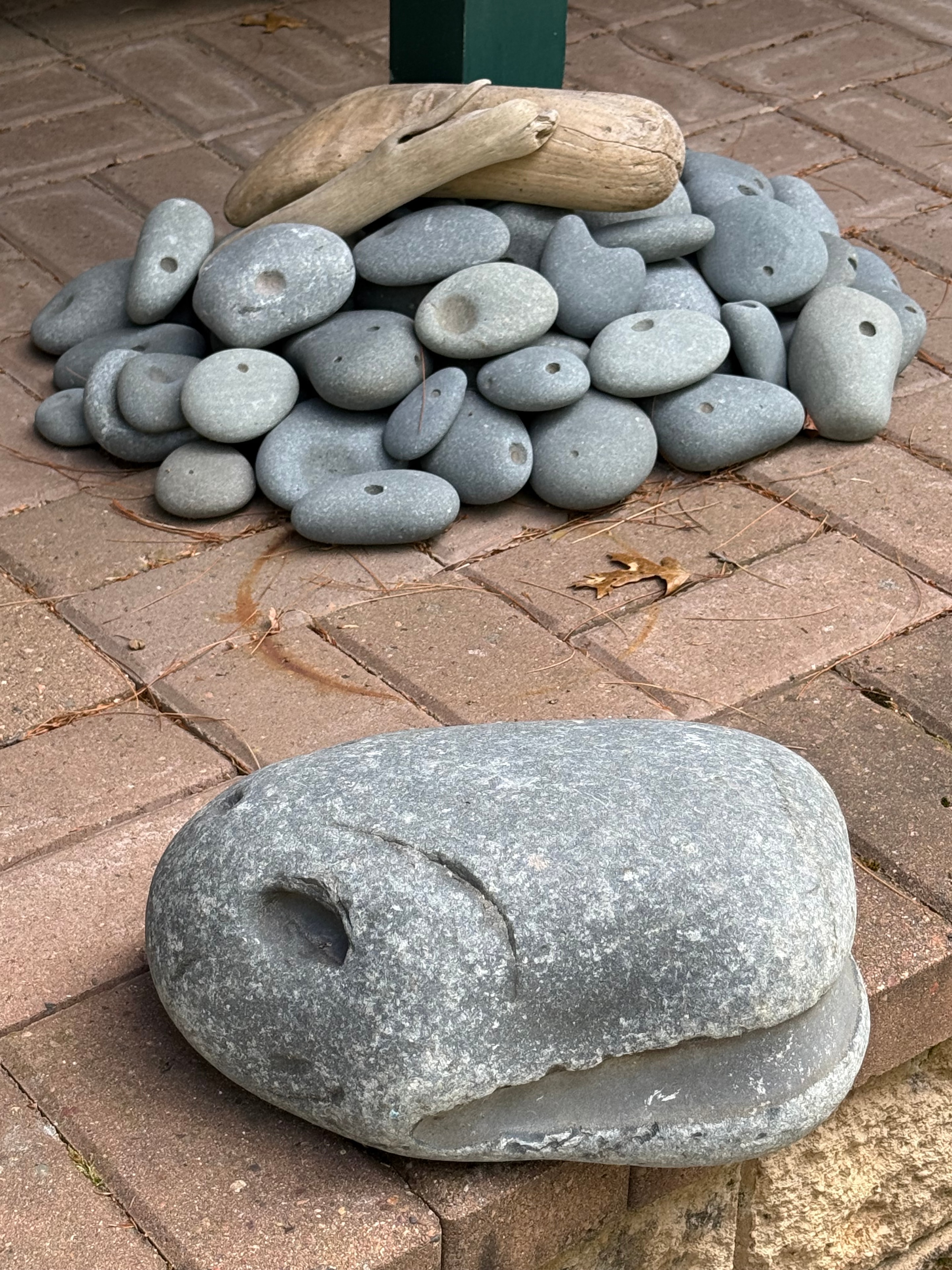
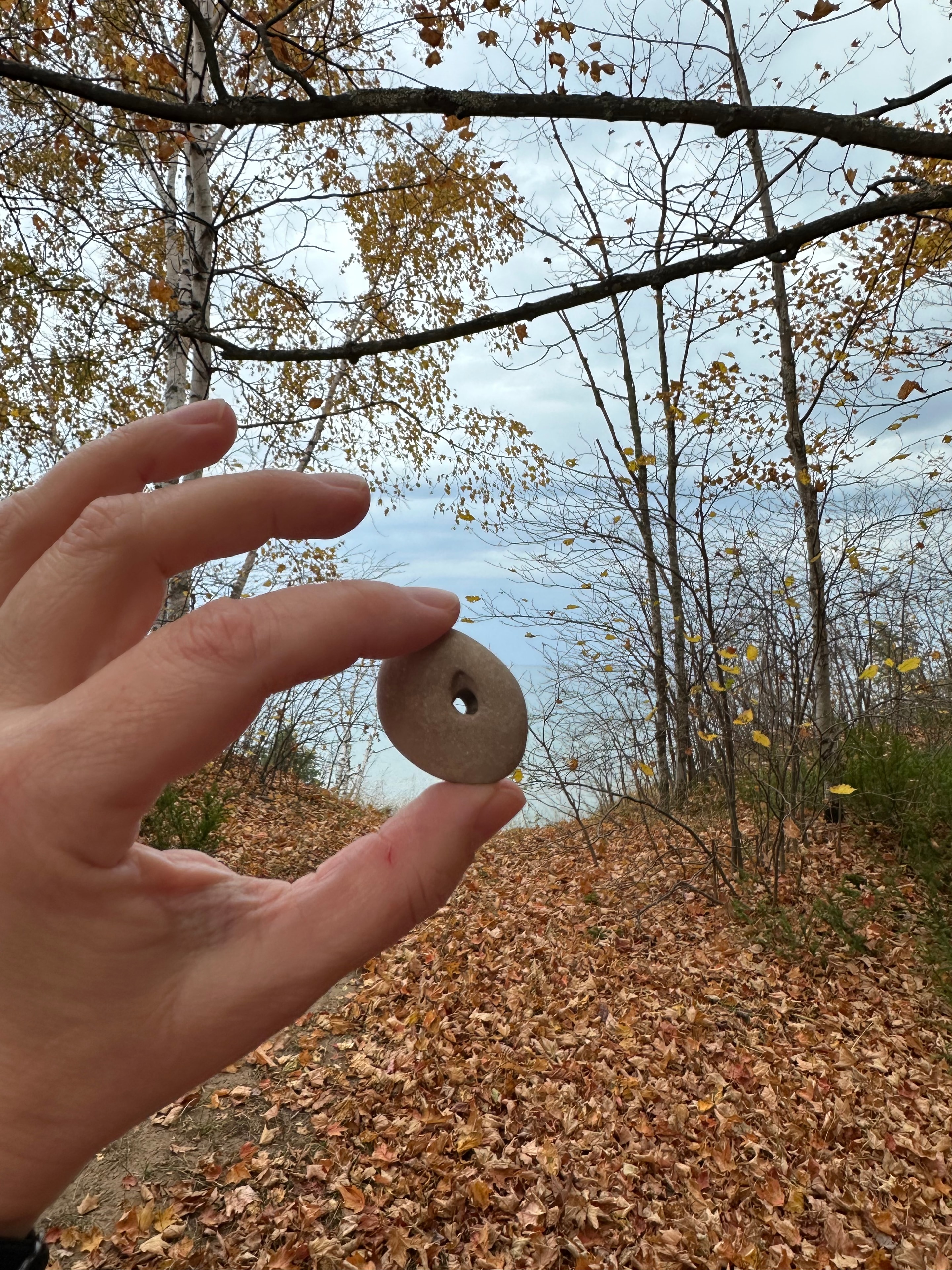
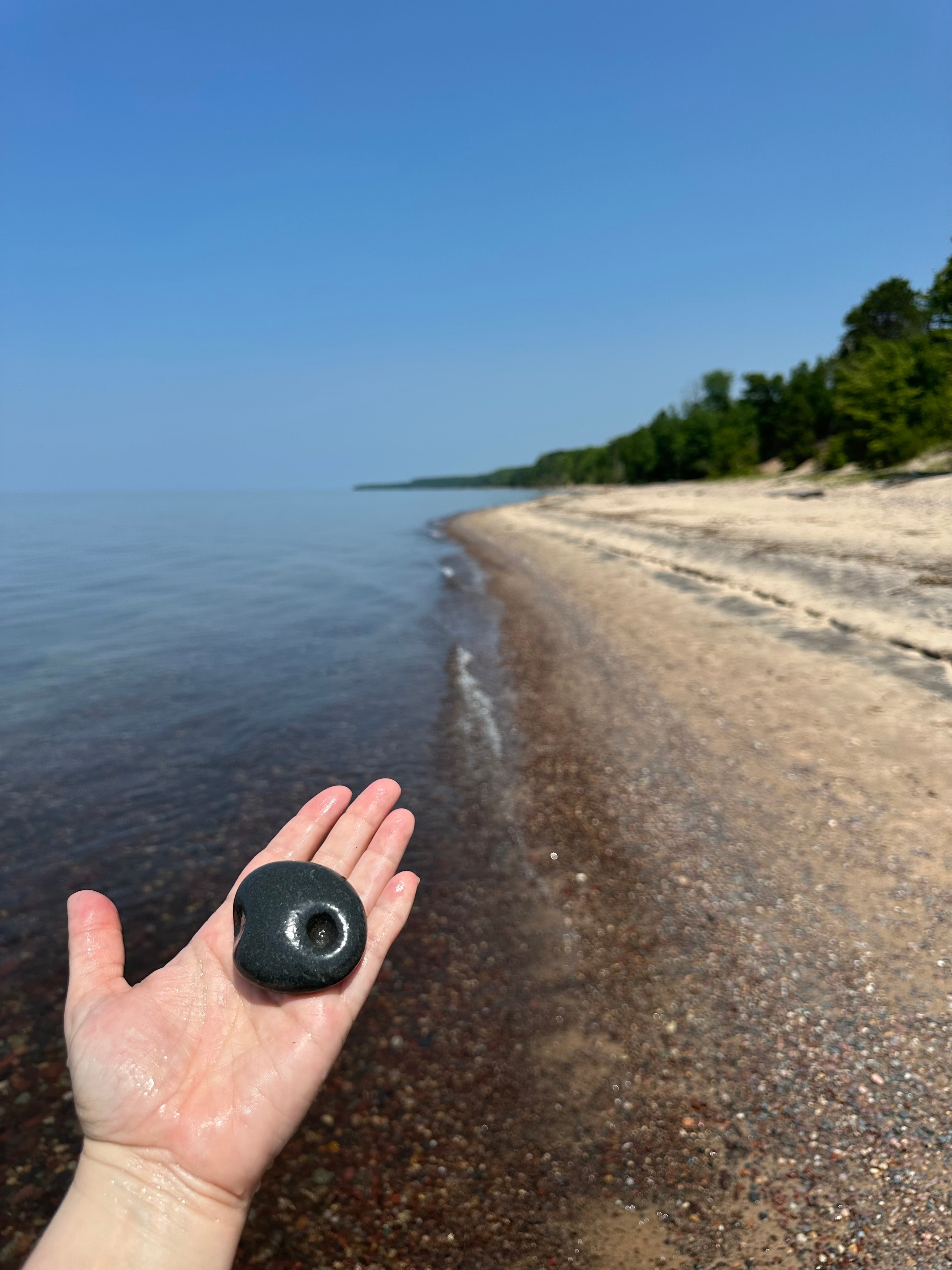
Very RareOne of our personal favorites and a truly rare find on Lake Superior shores. Officially called Omarolluk stones — sometimes affectionately known as Omars — these ancient stones were carried here by glaciers thousands of years ago from the Hudson Bay region of Canada. What makes them unmistakable are their rounded holes or pits — smooth, bowl-shaped cavities that look almost man-made but are entirely natural. They form when softer carbonate concretions inside the sandstone erode away over time from wave action and weathering, leaving behind those smooth circular cavities. Finding one is a genuine treasure — you are holding a piece of glacial history that traveled hundreds of miles to land at your feet.
Our Personal Finds
A few of our favorite discoveries from the shore
Fluorescent Sodalite
Special FindLeft: in normal daylight. Right: under UV shortwave light — the same rocks, completely transformed.
Omarolluk
Very RareNotice the smooth, bowl-shaped pits — natural cavities left behind as softer material eroded away over thousands of years.
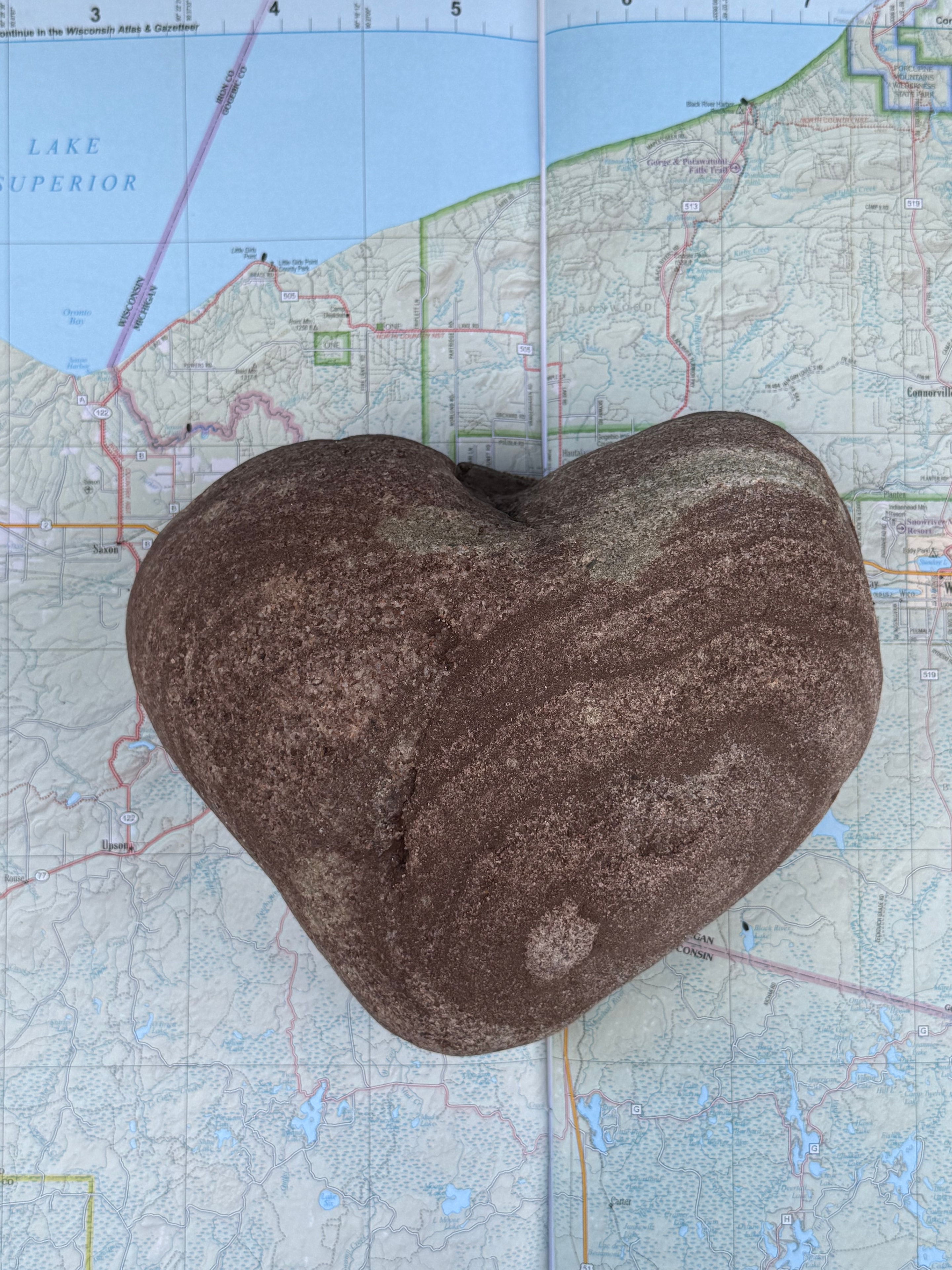
More from the Shore
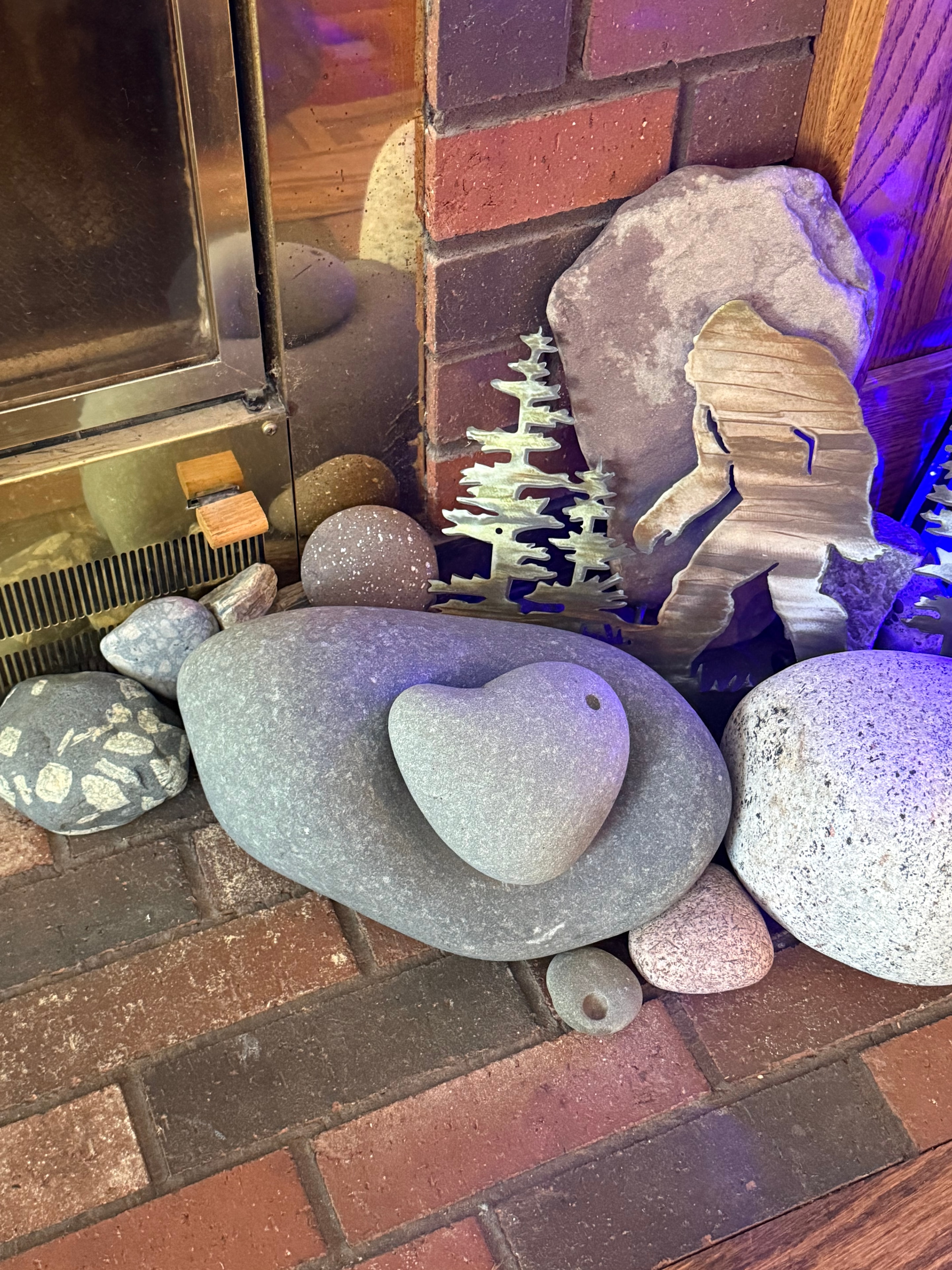
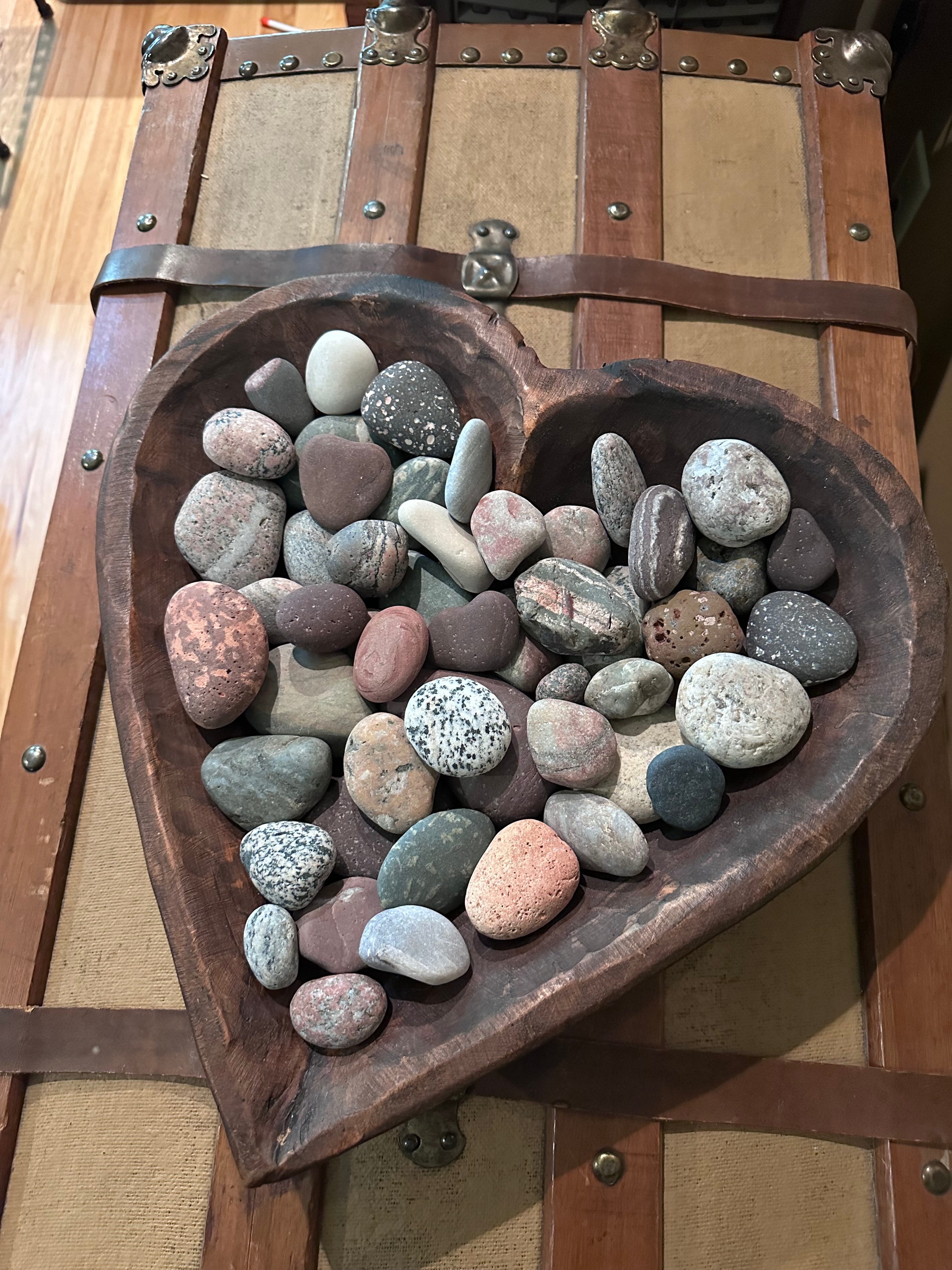
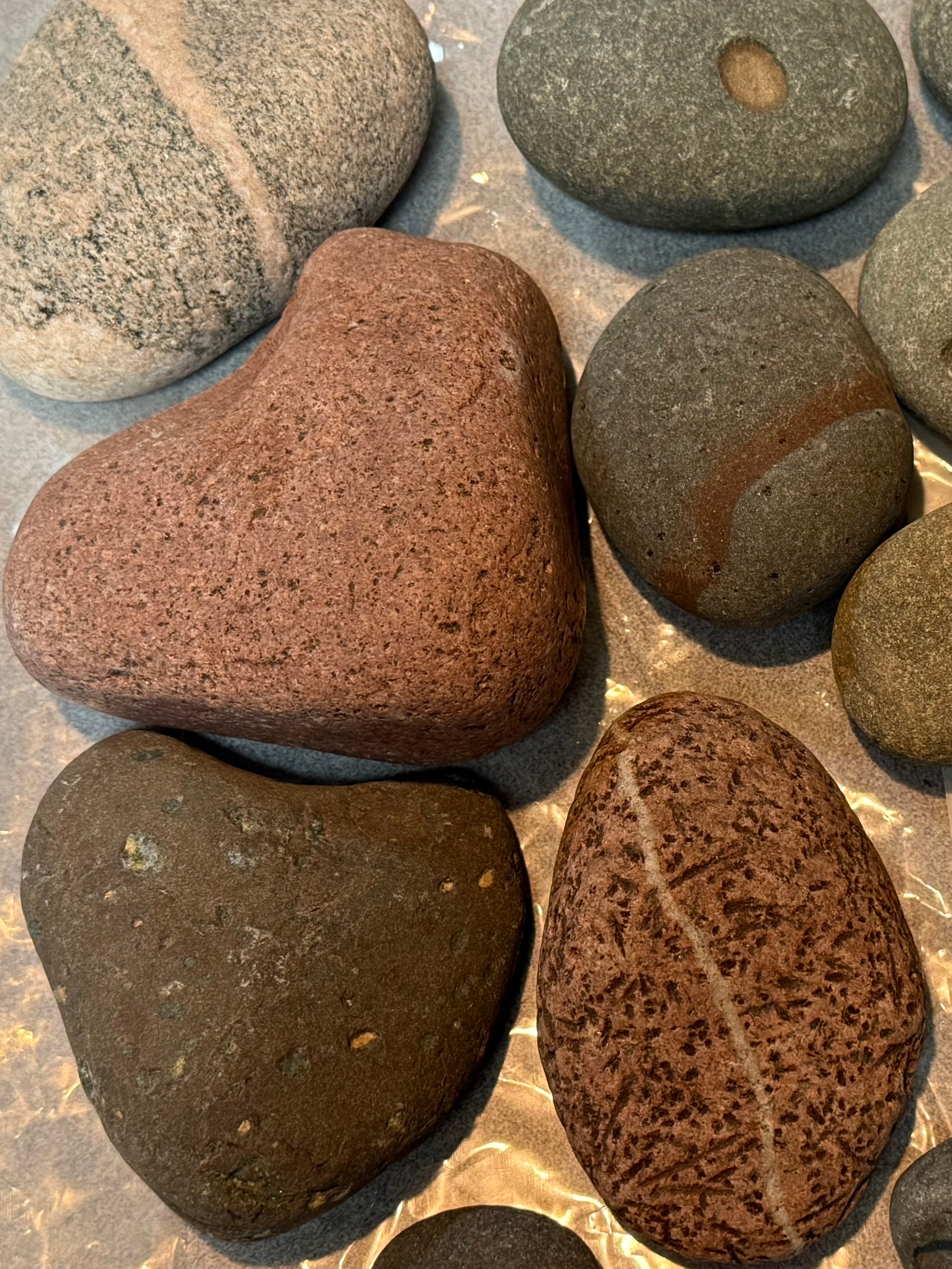
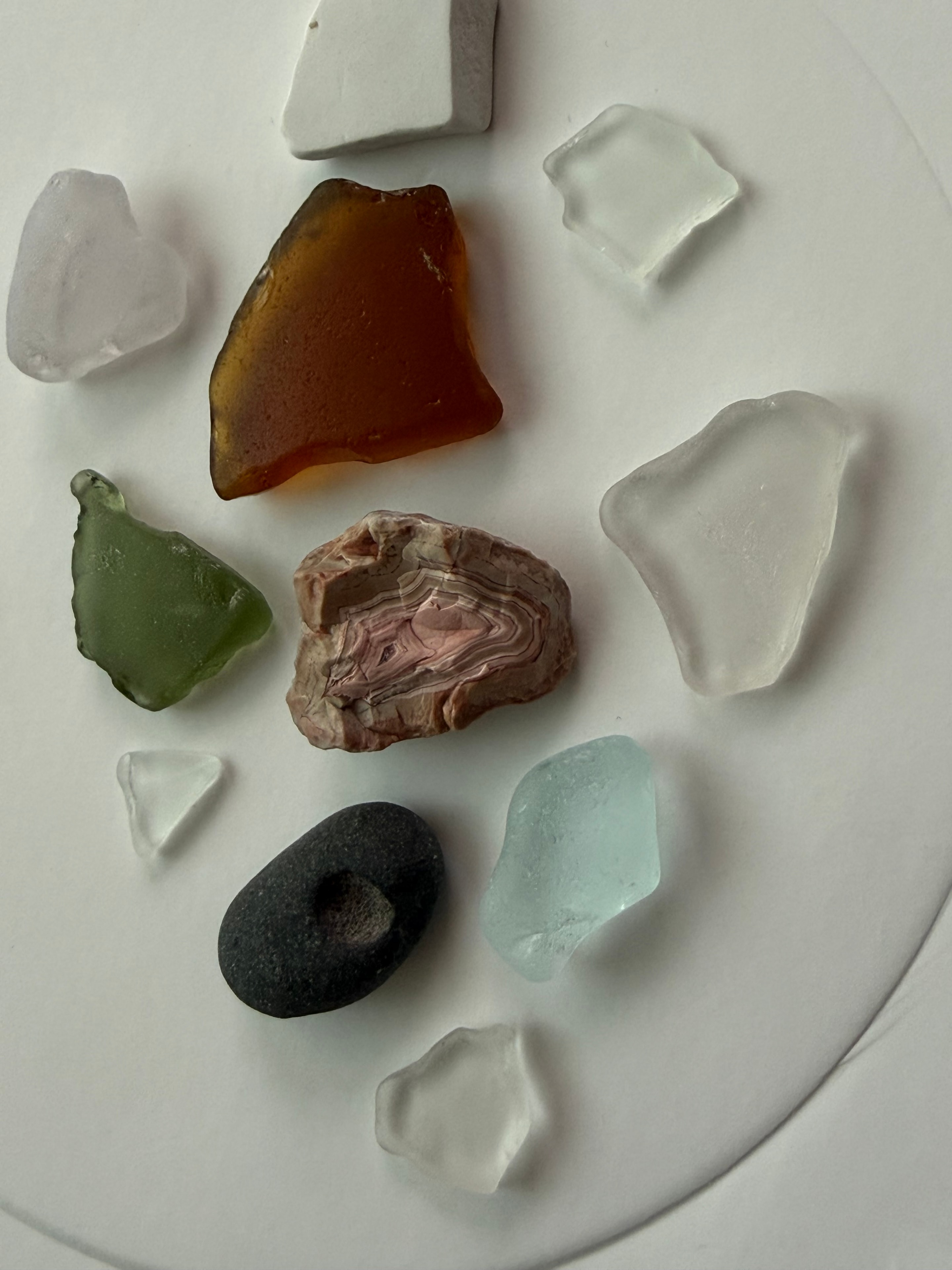
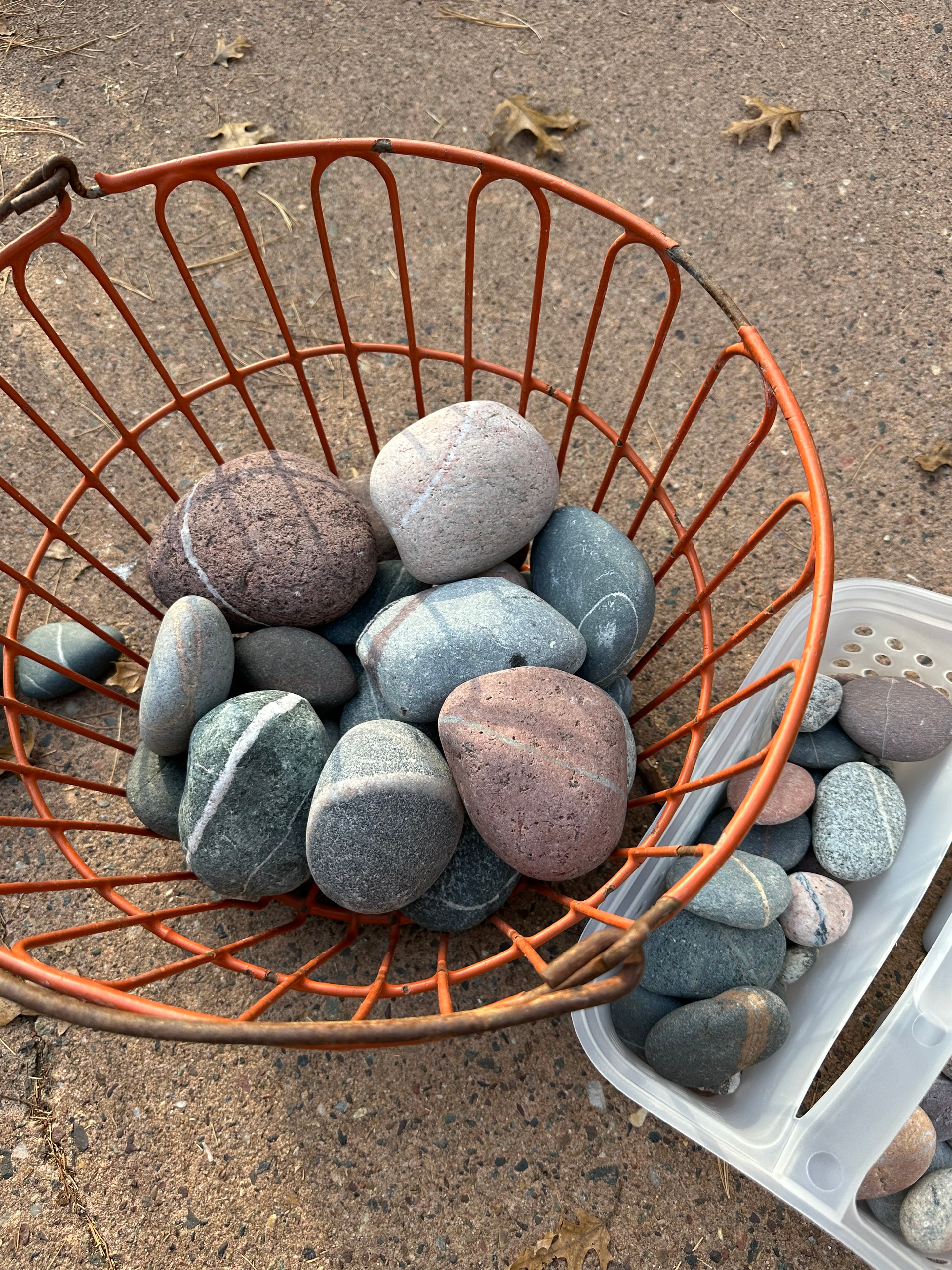
Some of our favorite finds: stripes, heart shapes, jasper, beach glass, a small agate, and more. All fun treasures in the eye of the beholder — each one attached to a memory of a trip to the shoreline.
Where to Look
Gravel Bars & River Mouths
Rivers carry rocks down from inland and deposit them at the shore. The gravel bars at river mouths are prime agate hunting ground, especially after high water.
After Storms
Wave action turns over the gravel and brings fresh material to the surface. The day after a storm is often the best day to hunt.
Low Water Lines
Walk the wet gravel at the water's edge. Wet stones show their true color and translucency — agates that look dull when dry will glow when wet.
Public Beaches & State Forests
Stick to public land. Collection is generally allowed on national forest land and public beaches in small personal quantities. It is prohibited in state parks.
How to Look
Move slowly. Scan a small area thoroughly before moving on. Most beginners walk too fast and miss everything. Get low — crouch or sit on the gravel and let your eyes adjust to the scale.
Look for color and translucency. Agates glow slightly in sunlight. Look for warm reds, oranges, and yellows in the gravel. Carry a small spray bottle — wetting stones reveals their true character instantly.
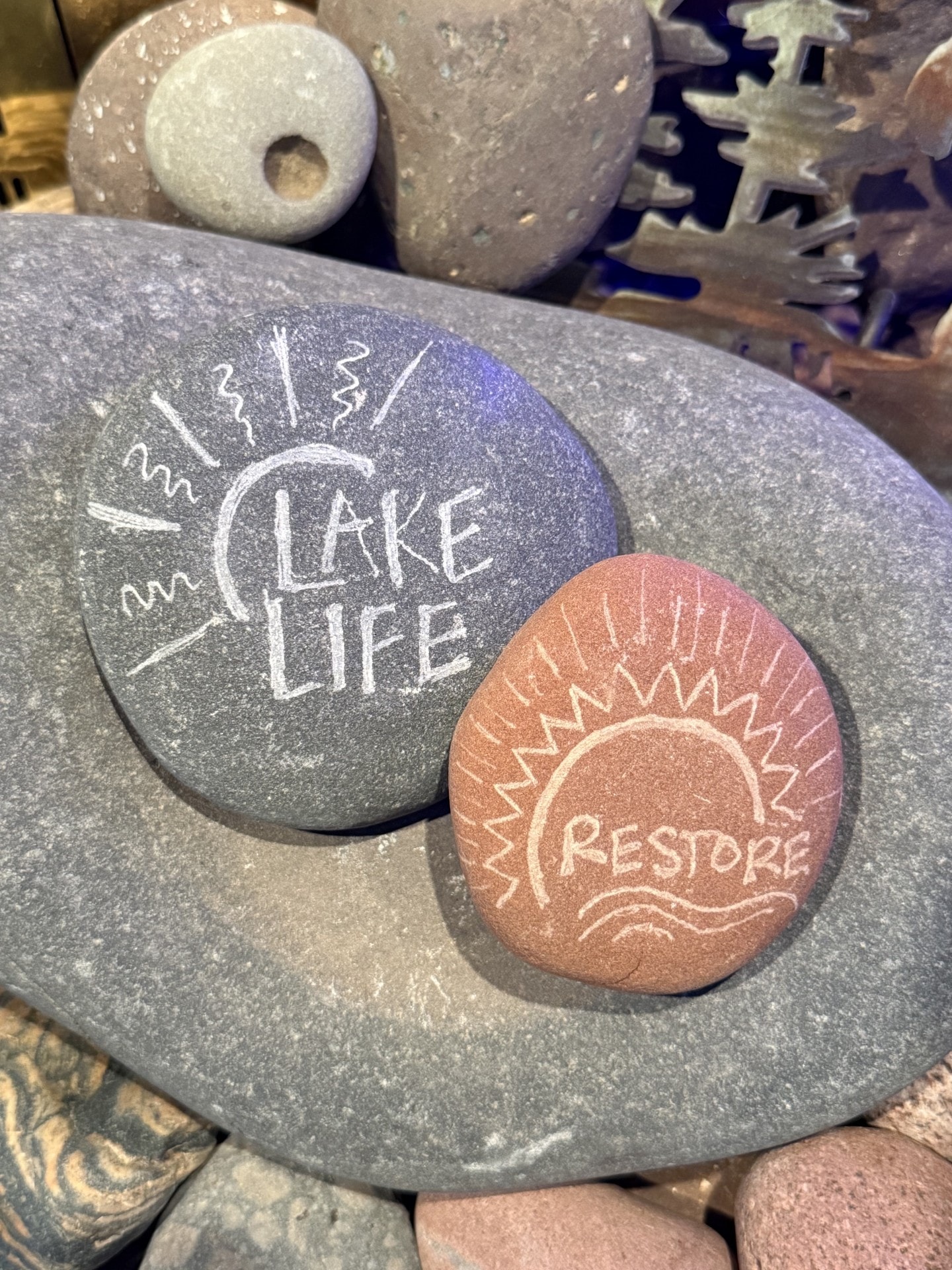
The Craft
Rock Engraving
Once you have collected stones you love, engraving is a beautiful way to transform them into lasting keepsakes, gifts, or art.
Choose Your Stone
Flat, smooth stones work best. Basalt, slate, and fine-grained rocks engrave cleanly. Avoid very hard stones like quartz for beginners — they require diamond-tipped bits.
Gather Your Tools
A rotary tool (like a Dremel) with diamond-tipped engraving bits is the standard. Start with a basic kit. A flex shaft attachment gives you more control for fine detail work.
Sketch First
Use a pencil or chalk to sketch your design on the stone before you begin. Simple designs — words, waves, simple shapes — are the best starting point.
Work Slowly
Let the tool do the work. Light, consistent pressure and slow movement produce cleaner lines than pressing hard. Keep the stone cool — work in short sessions and let it rest.
Safety First
Always wear safety glasses. Rock dust is harmful to breathe — work outdoors or with ventilation, and consider a dust mask. Secure the stone so it cannot slip.
Finish & Seal
Wipe away dust with a damp cloth. A coat of mineral oil or stone sealer deepens the color and protects the engraving. Let it cure fully before handling.
Rockhounding Safety
Watch the Water
Never get so focused on the rocks that you lose track of the lake. Waves can come in fast on rocky shores. Always keep an eye on the water. From experience, we don't turn our backs on Mother Superior, she will baptize you quickly with her roque waves.
Wear Sturdy Footwear
Cobblestone beaches are uneven and slippery when wet. Ankle support matters. Leave the flip-flops in the car. Don't get us wrong, we have often walked barefoot in the sand, but we travel with extra shoes and come prepared.
Protect Your Back
Hours of bending and scanning takes a toll. Bring a small stool or kneeling pad. Take breaks. The rocks will still be there.
Know the Rules
Collection limits and permitted areas vary. When in doubt, take only a few stones for personal use and leave the rest for others to enjoy.
Ready to Head to the Shore?
Pack your bag, check the weather, and go slowly. The best finds come to those who take their time.